Lifting operations
Heavy equipment lifting in Jeddah
The lifts that need planning before they need machinery: steel hangar erection, tank and machinery placement, and work inside factories and batching plants.
- Hangar & warehouse erection
- Tank and machinery placement
- Plant work
- Multiple machines coordinated
Hangar & warehouse erection
Overview
A difficult lift is solved before the day, not on site
Heavy lifting differs from an ordinary lift in one respect: the number of things that can complicate it. The load is heavy or awkwardly shaped, the setup space is tight, there are cables or neighbouring buildings in the way, and sometimes more than one machine has to work the same load at the same time.
So we start with questions before the date: weight, dimensions, height, horizontal distance, ground conditions and the access route for the machine. Those answers decide the crane size, where it stands, and whether a boom lift is needed alongside it to fix the load in place.
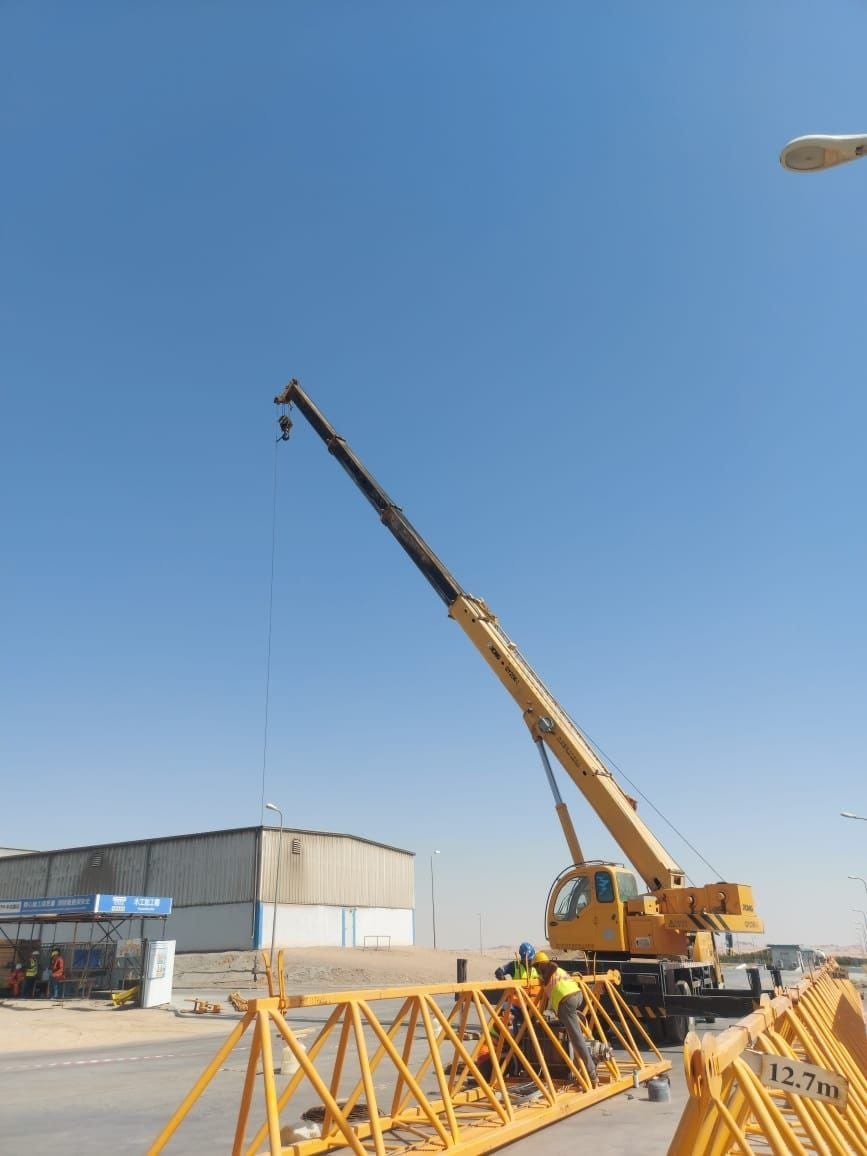
The photographs on this page are from steel erection work and from lifts inside factories, batching plants and industrial sites.
- Erecting columns and rafters for steel hangars and warehouses
- Lifting and placing tanks, silos and plant equipment
- Setting heavy machinery down into position
- Lifts inside concrete batching plants and industrial districts
- Loading and unloading heavy equipment to and from trailers
- Jobs that need a crane and a boom lift working together
Real projects
Lifting work carried out on site
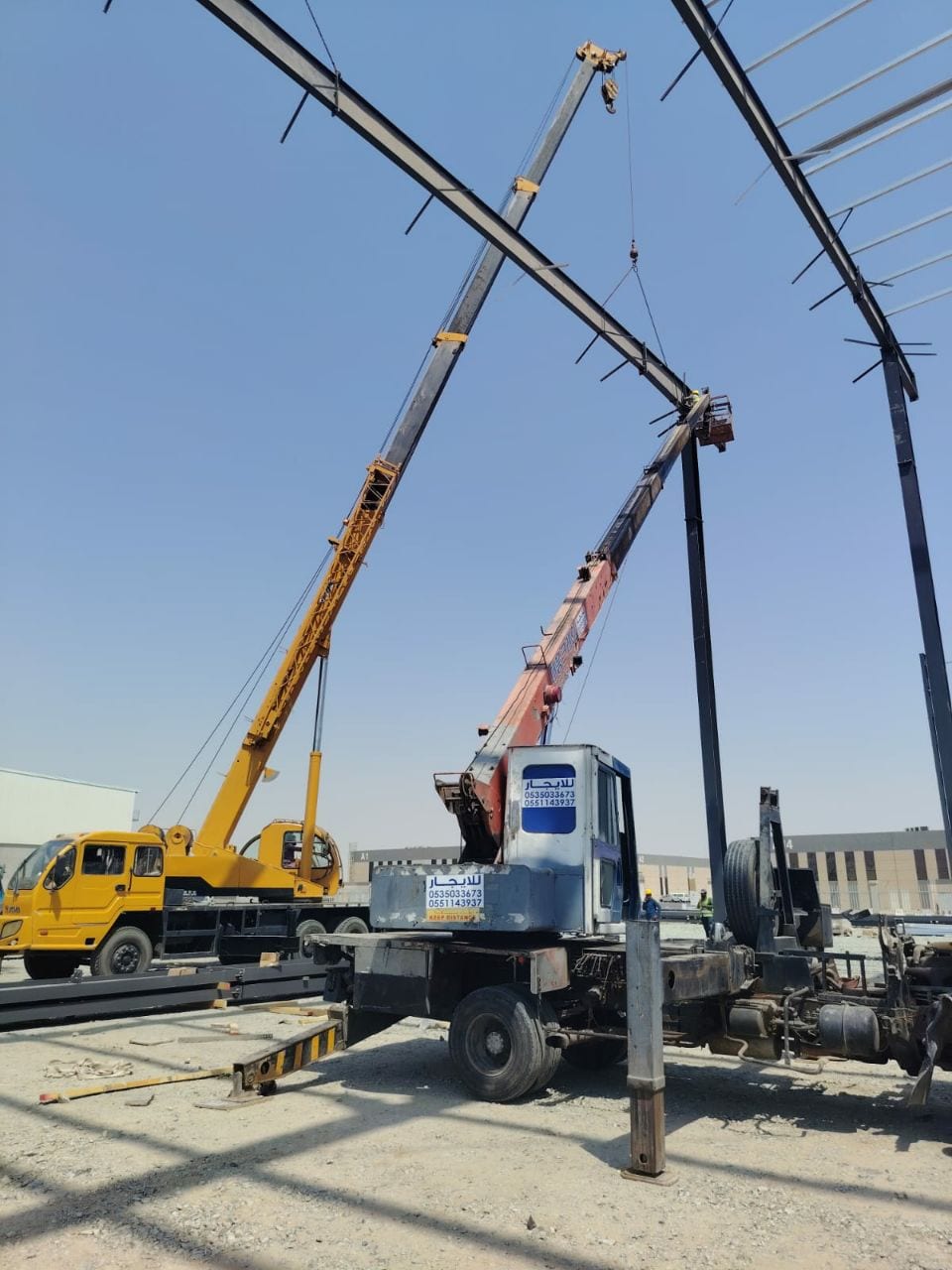
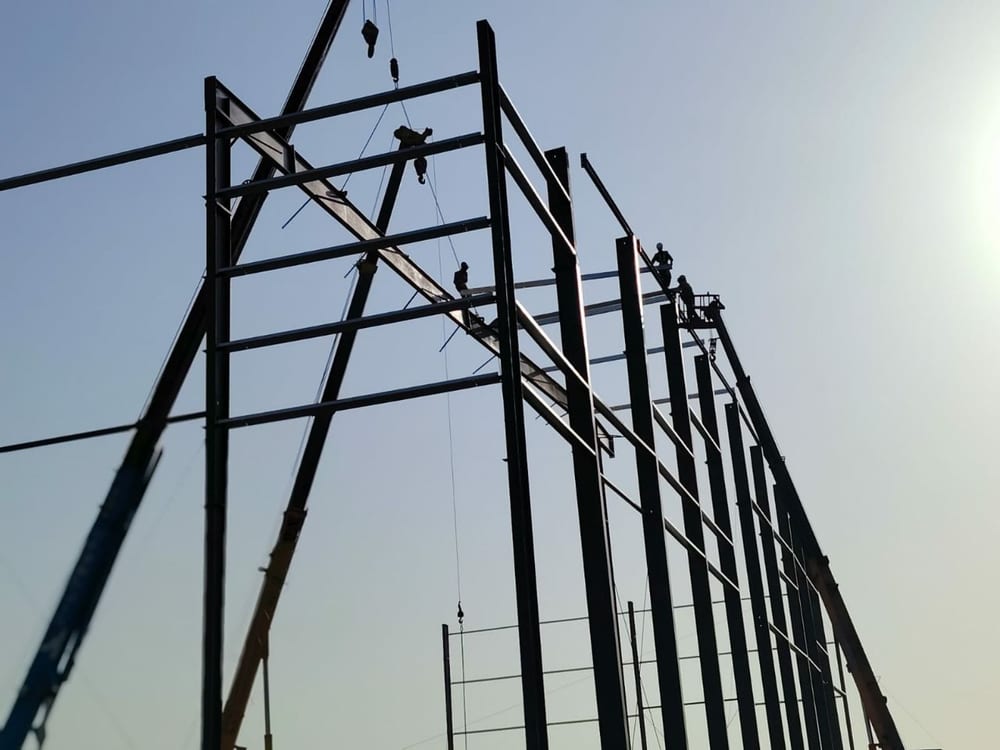
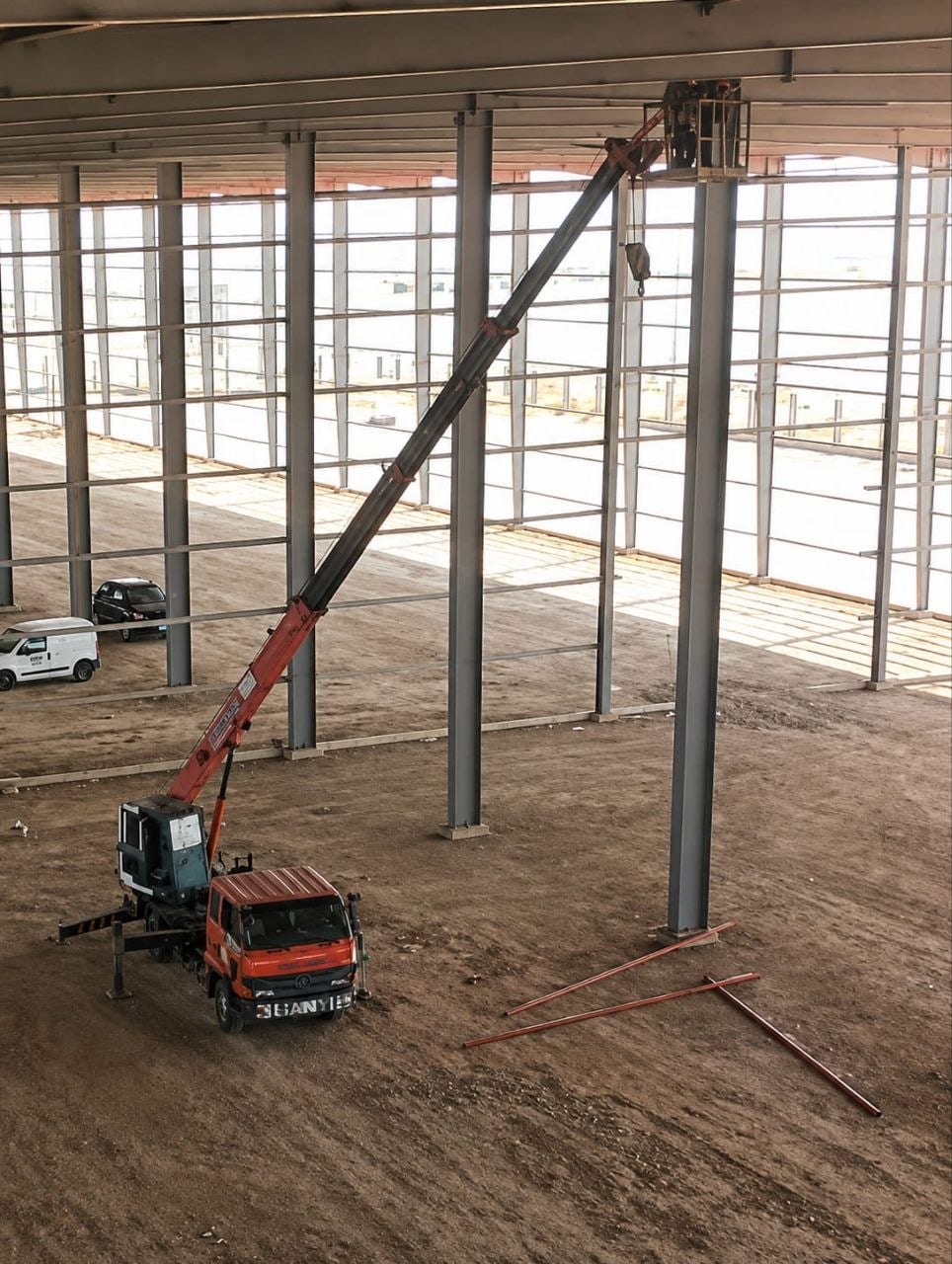
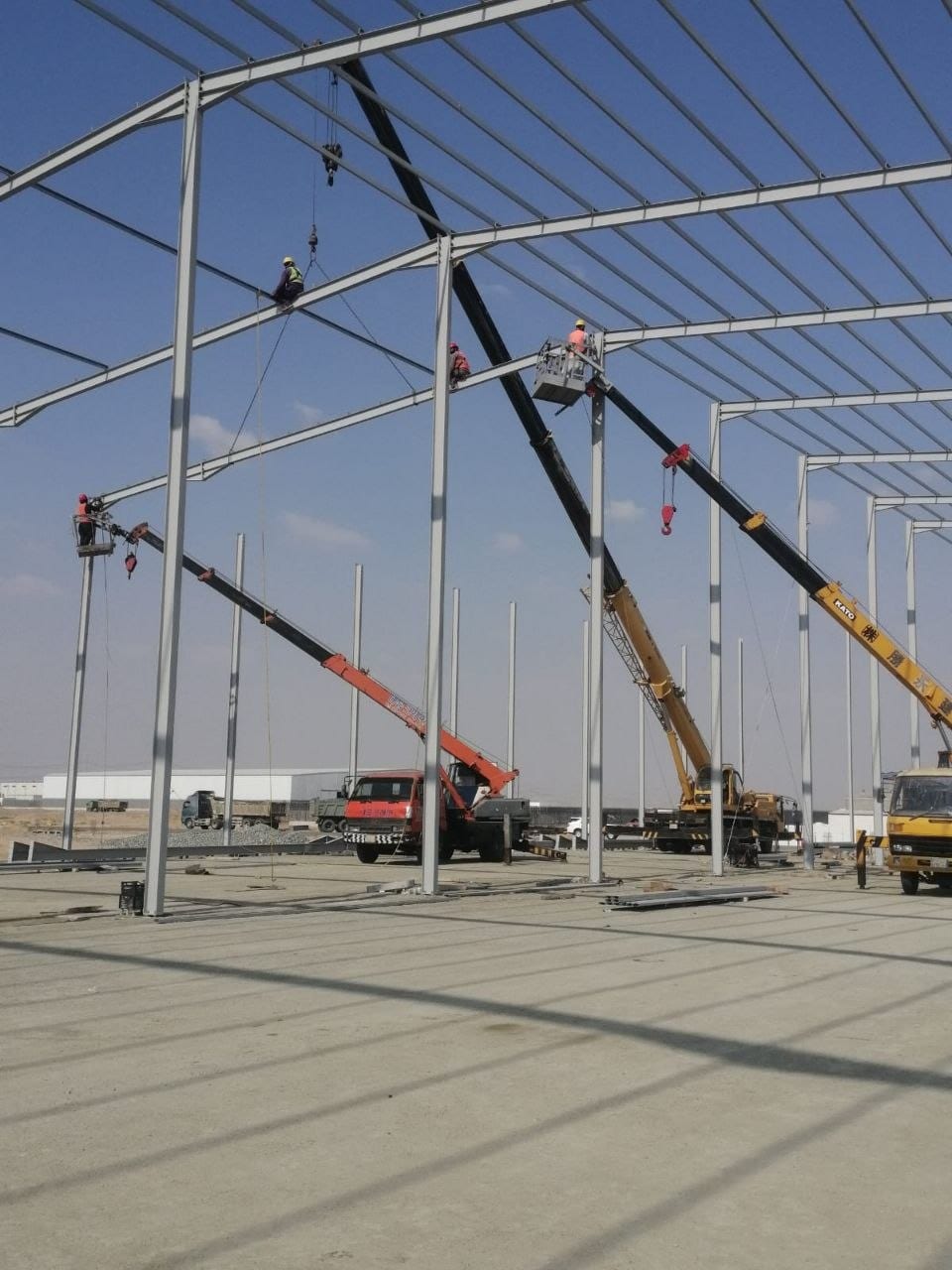
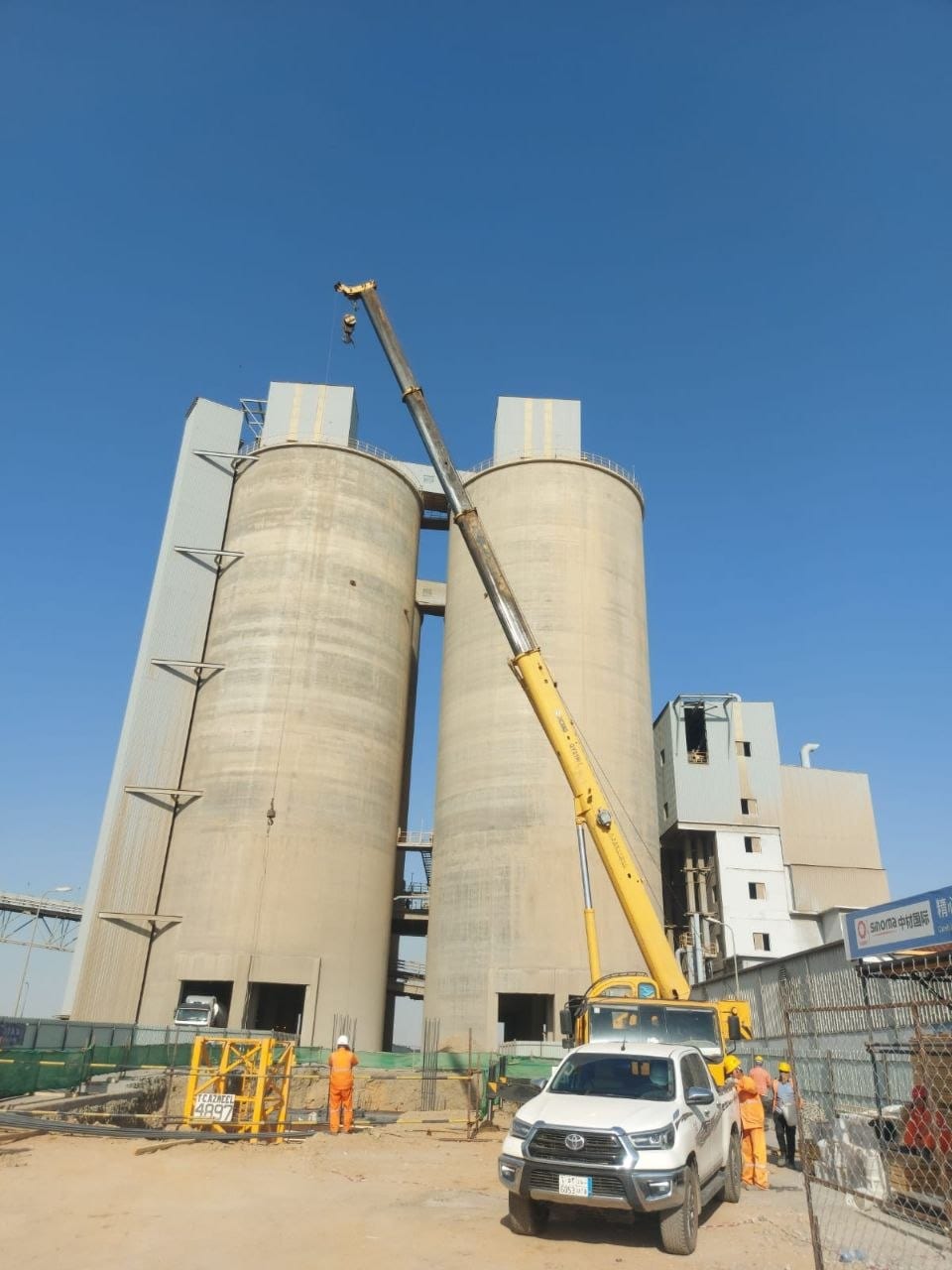
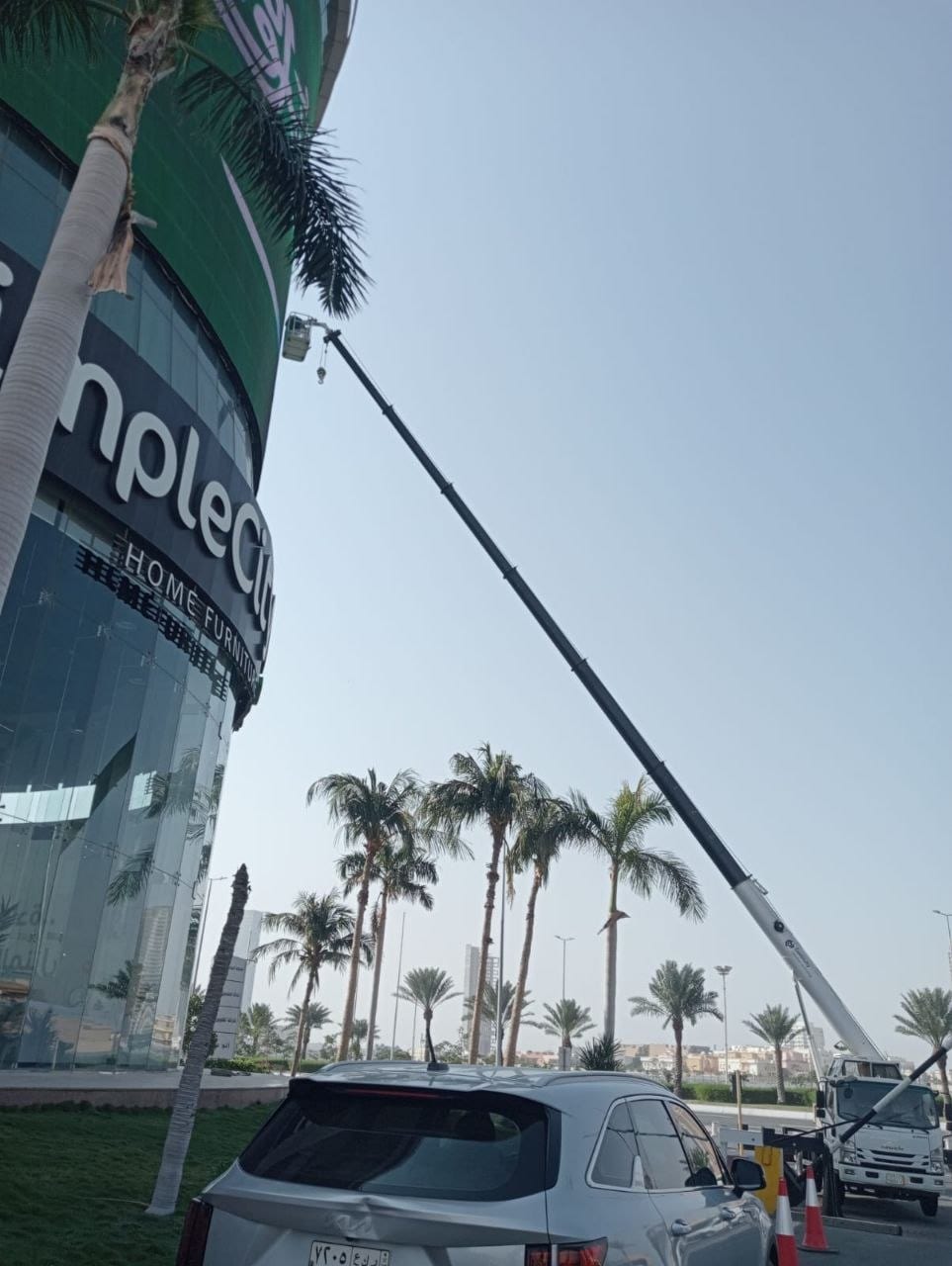
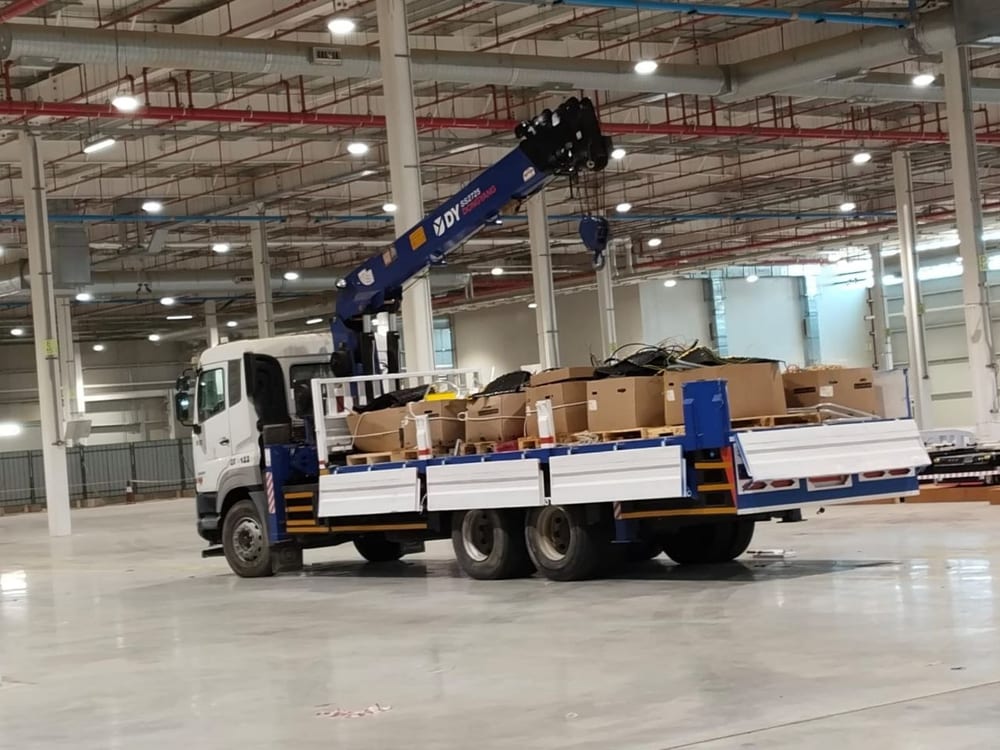
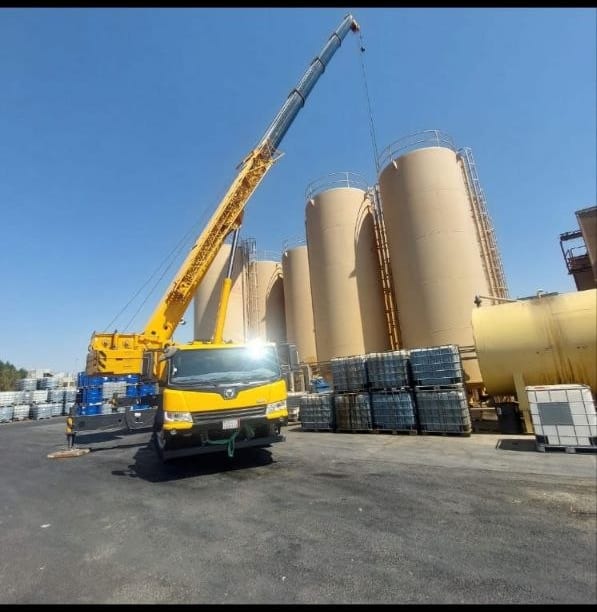
From site
A crane and a basket lift on the same frame
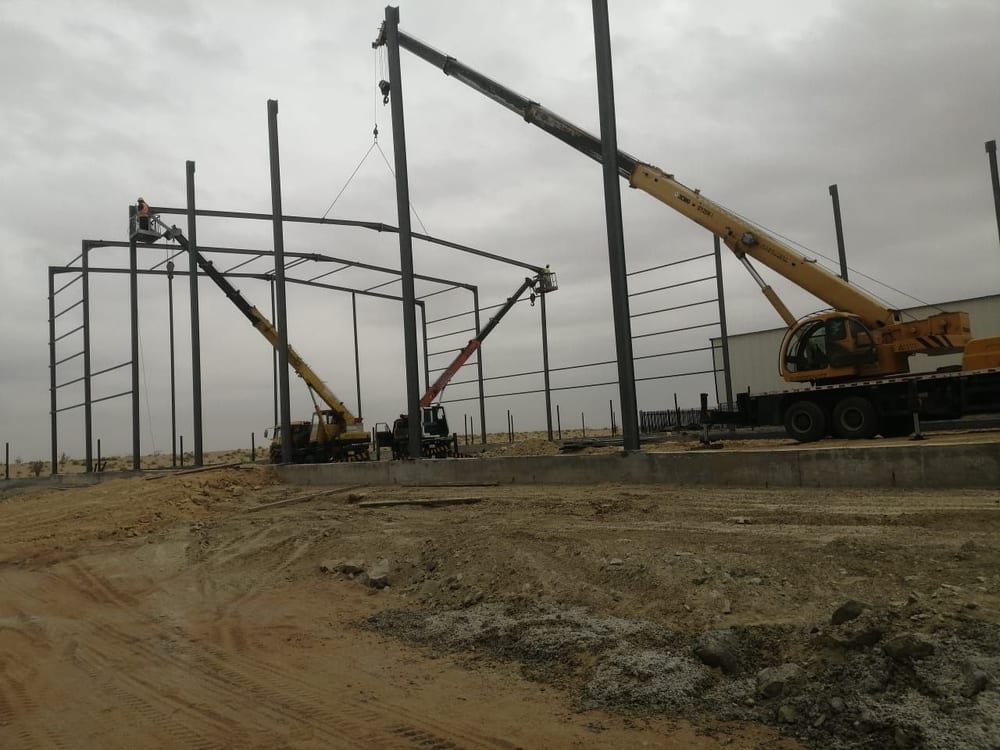
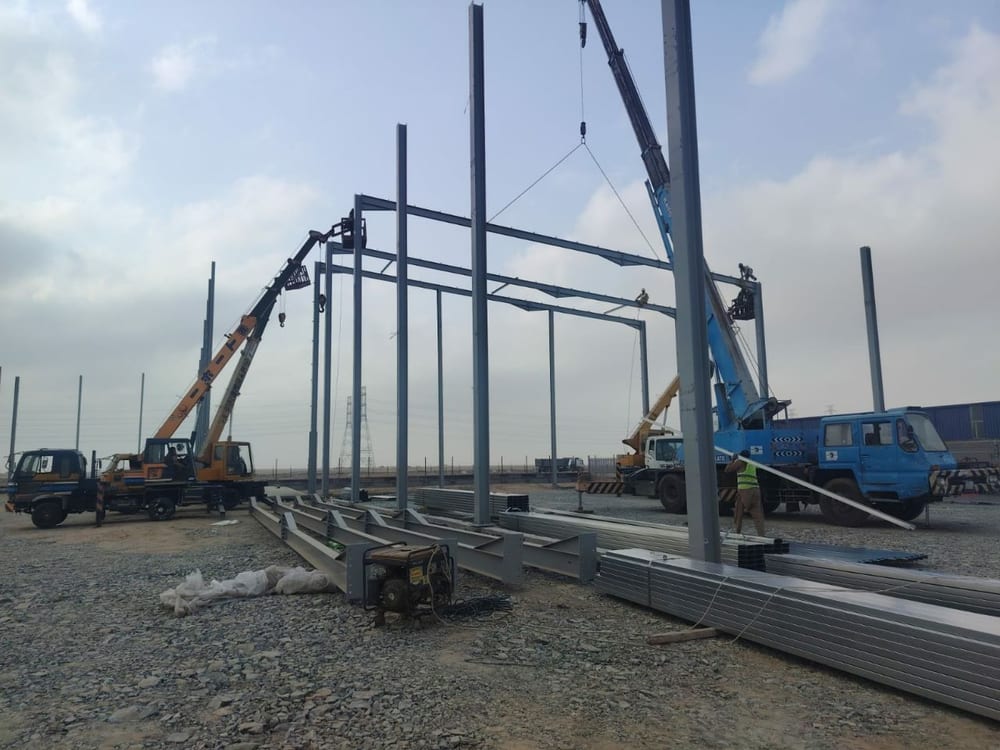
This is what heavy lifting looks like on our jobs: a crane rigged on the ground holding the section, and a basket lift putting the men at the fixing point on the rafters — two machines on one site, because the work does not finish with either alone.
A steel portal frame going up: an orange truck crane rigged on the left, a truck-mounted basket lift with its boom raised to the rafters on the right, purlins already fixed overhead and steel members laid out on the ground ready to lift.
How we prepare
How a heavy lift gets planned
Study the load
Weight, dimensions, centre of gravity, and where it can safely be attached.
Choose machine and position
Crane size, where it stands, and the boom length needed to cover height and reach together.
Prepare the site
Suitable ground under the outriggers, the lift area cleared, and coordination with other trades on site.
Lift and monitor
Step by step with a banksman guiding the operator, and the load secured in place before the rigging comes off.
Safety
Safety comes first on every lift
A safe lift is decided before the machine leaves the yard. These are the things we do on every job, not just the difficult ones.
Plan the lift before the day
Weight, lifting points, the path of the load and the closest position the crane can actually stand — worked out ahead of time, not on site.
Match the machine to the load
The load sets the capacity; the distance and height set the boom length. We do not send a machine and hope it reaches.
Set up properly before anything moves
Outriggers on ground that will take the load, spreader plates underneath where needed, and the machine level before the first movement.
Secure the area around the lift
The area under the load cleared, uninvolved workers moved back, and overhead cables and neighbouring buildings accounted for.
A banksman with the operator
Someone on the ground directing with agreed signals and watching the angles the operator cannot see from the cab. If anything looks wrong, the lift stops.
Sound slings and shackles
Slings chosen for the weight and shape of the load, checked before use, and anything with a defect taken out of service.
These are the working practices we actually follow on our sites. We do not claim certifications, accreditations or safety awards we cannot document. If your project has specific safety requirements or paperwork, tell us before the booking and we will be straight with you about what we can meet.
FAQ
Questions about heavy lifting
Do you handle steel hangar and warehouse erection?
Yes — erecting hangar and warehouse structures is regular work for us. These jobs normally need a crane to raise the columns and rafters plus one or more boom lifts to make the connections at height.
Do you need a site visit before the job?
It depends on how complex the lift is. Straightforward lifts can be handled from accurate photos and dimensions over WhatsApp. For large lifts or very tight sites, a visit beforehand saves time and trouble on the day.
Can you run a lift that needs more than one machine?
Yes, and many jobs genuinely need it — a crane and a boom lift, or several lifts working on the same structure. Tell us what the job involves and we will schedule the machines together.
What information do you need to quote?
Load weight, dimensions, the height of the landing point, the horizontal distance from where the machine can stand, and photos of the site. The more precise the information, the faster and more accurate the price.
Got a lift that needs planning?
Send the load details and site photos on WhatsApp and we will come back with the right machine and a method.
Related pages